#  iPlayarr
 is a companion tool for **Sonarr** and **Radarr**, making it easy to integrate **get_iplayer** for searching and downloading iPlayer content directly. It acts as both an **indexer** and a **download client**, allowing seamless automation of TV and movie downloads.
[](https://discord.com/channels/1359619754456907856)

[](https://coveralls.io/github/Nikorag/iplayarr?branch=main)
## 📸 Screenshots
iPlayarr
iPlayarr is a companion tool for **Sonarr** and **Radarr**, making it easy to integrate **get_iplayer** for searching and downloading iPlayer content directly. It acts as both an **indexer** and a **download client**, allowing seamless automation of TV and movie downloads.
[](https://discord.com/channels/1359619754456907856)

[](https://coveralls.io/github/Nikorag/iplayarr?branch=main)
## 📸 Screenshots
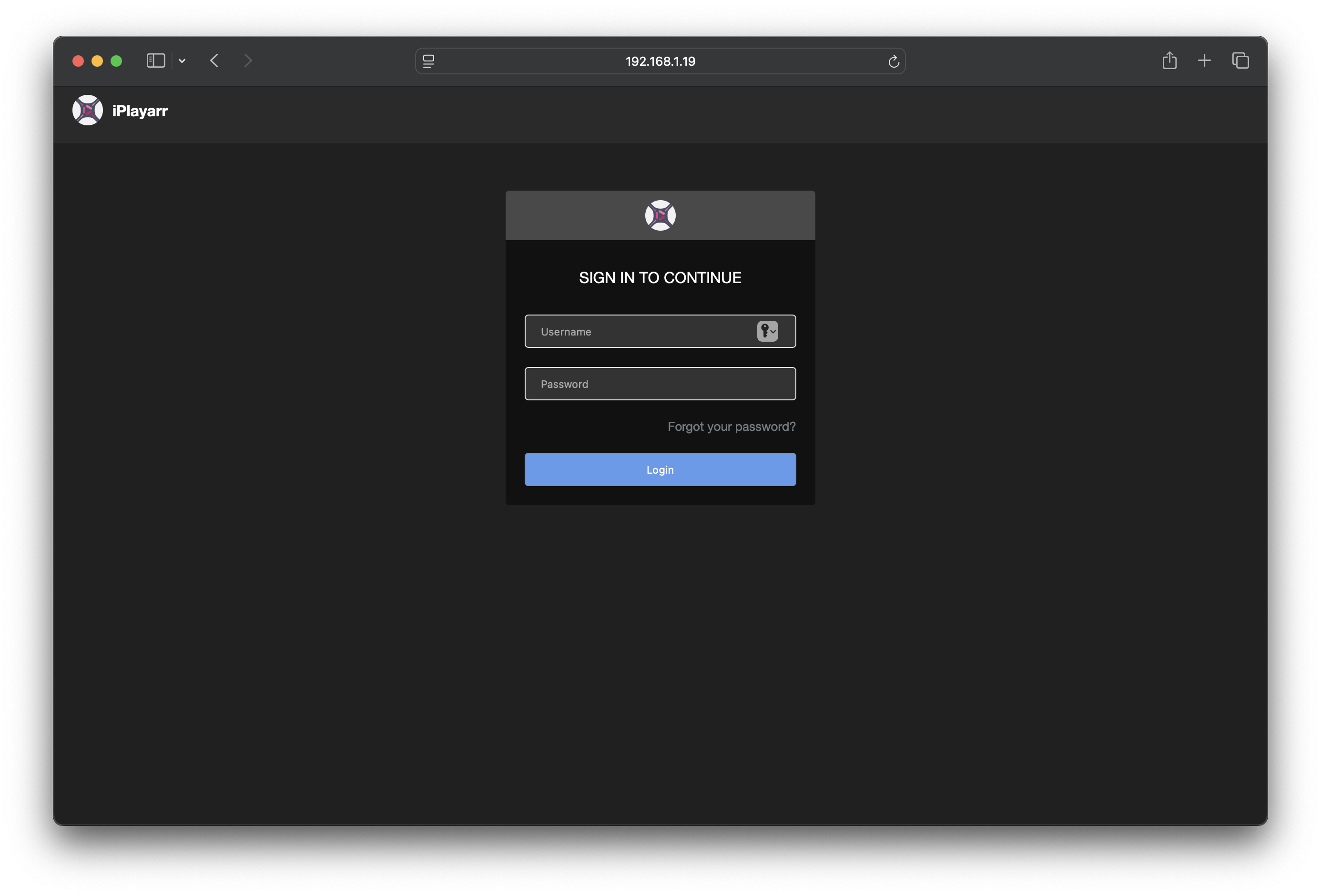
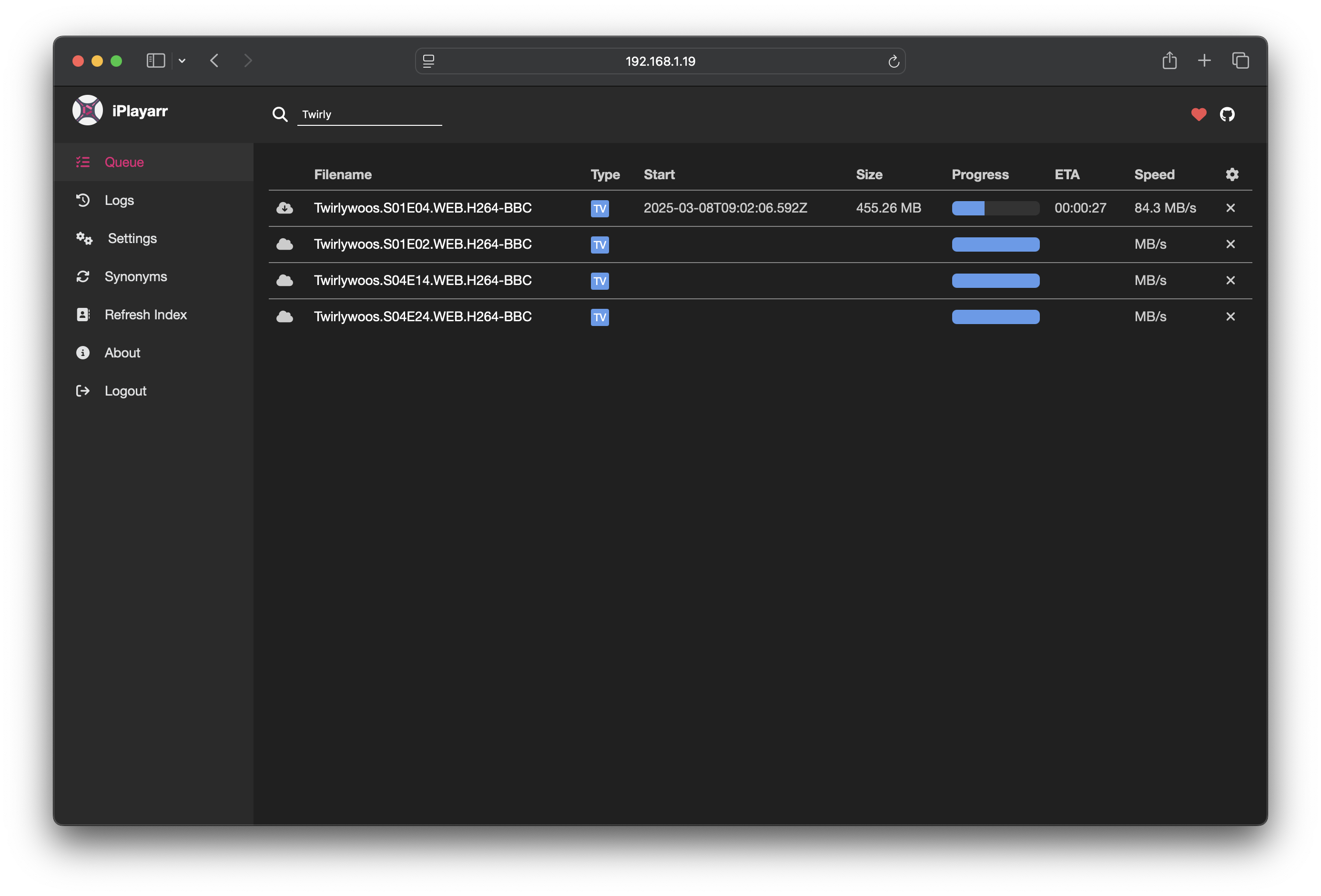
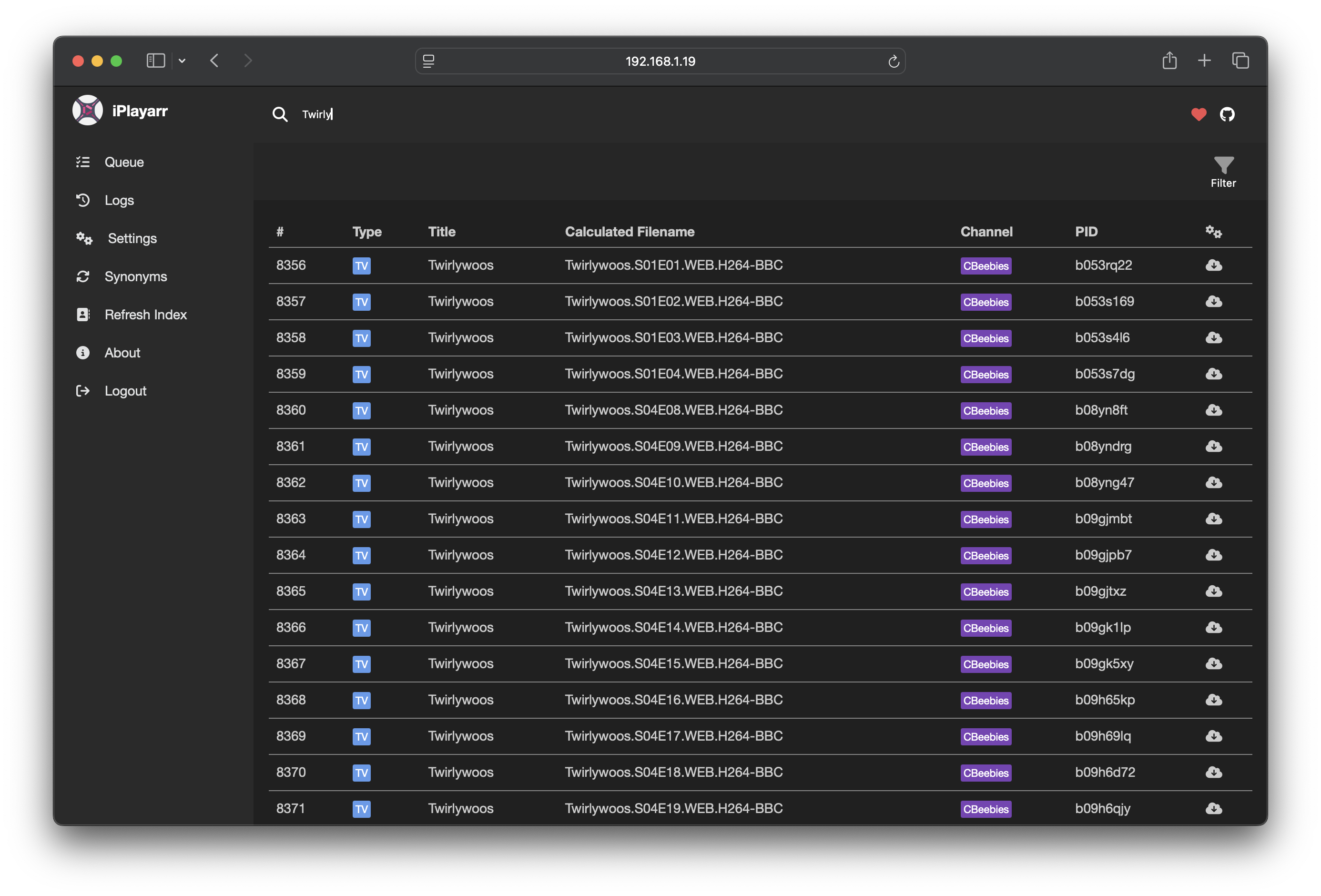
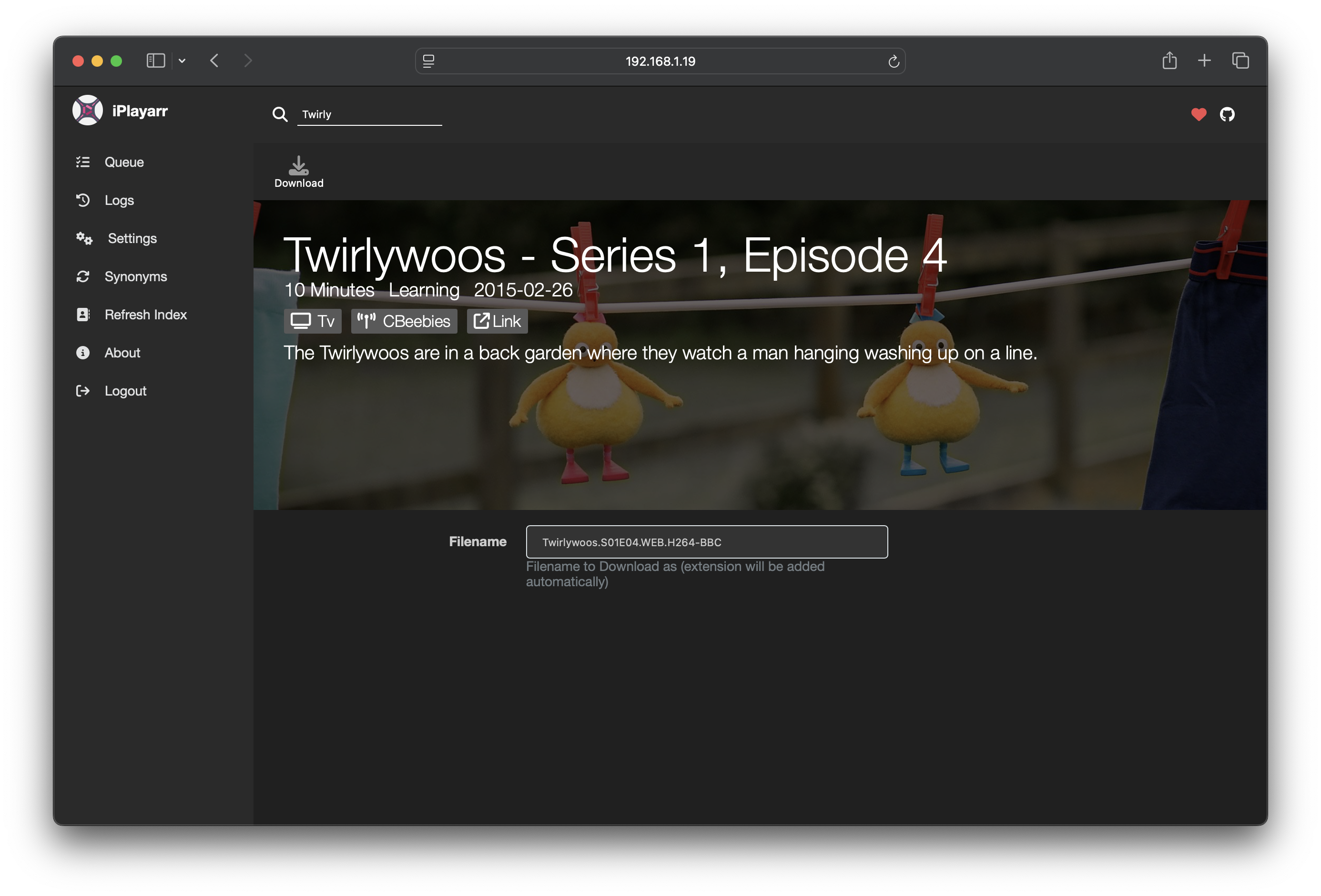
## Why iPlayarr?
iPlayer offers a wide range of high-quality content, but integrating it with Sonarr and Radarr has always been tricky. iPlayarr solves this problem by:
- Acting as a Newznab-compatible indexer, making iPlayer content searchable within Sonarr/Radarr
- Presenting as a SABnzbd-compatible download client, allowing automatic downloads and post-processing
- Handling the full download lifecycle, from fetching content with get_iplayer to organizing completed files
Unlike torrents and Usenet, iPlayarr operates in a less legally ambiguous space by only downloading content that is freely available for streaming.
## Why Create iPlayarr?
This project started as an experiment: Is it possible to integrate iPlayer with Sonarr/Radarr in a clean, automated way?
Most existing solutions rely on torrents or Usenet, but I wanted something that could get media from a reliable source. iPlayarr functions like a personal DVR for iPlayer, making it easier to automate downloads without needing traditional PVR software.
## Getting Started
### Download/Installation
The simplest way to use iPlayarr is via Docker:
```bash
docker run -d --name iplayarr \
-v ./cache:/data \
-v ./config:/config \
-v ./logs:/logs \
-v /path/to/incomplete:/incomplete \
-v /path/to/complete:/complete \
--env-file=env-file \
-p 4404:4404 \
nikorag/iplayarr:latest
```
Alternatively, use the bundled Dockerfile:
```bash
docker build -t iplayarr .
docker run -d --name iplayarr \
-v ./cache:/data \
-v ./config:/config \
-v ./logs:/logs \
-v /path/to/incomplete:/incomplete \
-v /path/to/complete:/complete \
--env-file=env-file \
-p 4404:4404 \
iplayarr
```
Or use Docker Compose:
```yml
services:
iplayarr:
image: 'nikorag/iplayarr:latest'
container_name: 'iplayarr'
environment:
- 'API_KEY=1234'
- 'DOWNLOAD_DIR=/mnt/media/iplayarr/incomplete'
- 'COMPLETE_DIR=/mnt/media/iplayarr/complete'
- 'PUID=1000'
- 'PGID=1000'
ports:
- '4404:4404'
volumes:
- '/mnt/media:/mnt/media'
- './cache:/data'
- './config:/config'
- './logs:/logs'
```
You can pre-set the following environment variables, or you can set them in the Settings menu once the container is up.
| Property | Description |
| ------------ | ---------------------------------------- |
| API_KEY | Api key to secure your iplayarr instance |
| DOWNLOAD_DIR | Download directory for in progress pulls |
| COMPLETE_DIR | Directory to move completed files to |
There's a few more optional settings too:
| Property | Description |
| ---------------- | ----------------------------------------------------------------------------------------- |
| ACTIVE_LIMIT | How many downloads are allowed simultaneously, defaults to 3 |
| REFRESH_SCHEDULE | Cron expression for when to proactively refresh schedule, defaults to hourly, on the hour |
| HIDE_DONATE | If you don't like the Kofi donate links you can hide them |
| PUID | Host User ID for file permissions |
| PGID | Host Group ID for file permissions |
### Usage
**Authentication**
The default details are:
| Username | Password |
| -------- | -------- |
| admin | password |
**Sonarr and Radarr link**
> **Info:** The best way to add iPlayarr to Sonarr or Radarr is to use the "Apps" section of the web UI in iPlayarr
iPlayarr presents itself as both an indexer and a download client on port 4404. You can configure it automatically in the Settings menu or manually as follows:
**Add iPlayarr manually as a Download Client**
1. Go to Settings > Download Clients in Sonarr/Radarr.
2. Add a new SABnzbd client with the following details:
| Property | Value |
| -------- | ------------------ |
| Name | iPlayarr |
| Host | Your_Docker_Host |
| Port | 4404 |
| API Key | API_KEY from above |
| Category | iplayer |
3. Test and save.
**Add iPlayarr manually as an Indexer**
1. Go to Settings > Indexers in Sonarr/Radarr.
2. Add a new Newznab indexer with these settings:
| Property | Value |
| --------------- | ---------------------------- |
| Name | iPlayarr |
| URL | http://Your_Docker_Host:4404 |
| API Key | API_KEY from above |
| Download Client | iPlayarr (created above) |
### Web Interface
To access the web frontend, visit `http://Your_Docker_Host:4404`.
From here, you can manage settings, view logs, and monitor downloads.
## Development Setup
To run iPlayarr locally for development:
### Prerequisites
- Node.js (see `.node-version` for current version)
- Docker (for local dev instance of Redis)
### Installation
1. Install dependencies for both backend and frontend:
```bash
npm run install:both
```
2. Start Redis using Docker (or see Redis section below to use another instance):
```bash
npm run serve:redis
```
3. Start the development server (runs backend and frontend concurrently):
```bash
npm run dev
```
The application will be available at:
- Frontend: `http://localhost:8080` (Vue dev server)
- Backend API: `http://localhost:4404`
### Additional Useful Scripts
| Script | Description |
| -------------------- | ----------------------------------------- |
| `npm run build:both` | Build backend and frontend for production |
| `npm test` | Run tests with coverage |
| `npm run lint` | Run ESLint |
| `npm run prettier` | Check code formatting |
## Redis
iPlayarr uses Redis for storage. This is built into the container and **doesn't require any additional setup**, but if you would like to use a standalone redis instance, set the following settings:
- REDIS_HOST
- REDIS_PORT
- REDIS_PASSWORD (optional)
- REDIS_SSL (optionally 'true')
If these are all set, it will not start the bundled version of Redis.